 seolounge

A strong SEO Strategy is essential for businesses, bloggers, and online brands that want sustainable traffic from search engines. Search engine optimization is no longer just about adding keywords to a page. Today, SEO focuses on user experience, valuable content, technical performance, and authority.
With millions of websites competing for visibility, businesses must build a complete SEO strategy that helps search engines understand their content while also delivering value to readers. Whether you run a small local business or a global eCommerce website, mastering SEO can dramatically improve your online presence.
According to industry experts, organic traffic remains one of the highest-converting traffic sources because users actively search for solutions, products, and information. This guide will explain every major aspect of SEO and show you practical methods to improve rankings organically.
Understanding Modern SEO Strategy
Why SEO Still Matters in 2026
SEO continues to evolve, but its importance has only increased. Search engines are smarter than ever, and users expect highly relevant results instantly. Businesses that invest in SEO gain several advantages:
- Long-term organic traffic
- Improved brand visibility
- Higher website authority
- Better conversion rates
- Reduced dependence on paid advertising
A properly planned SEO strategy helps businesses appear when users search for relevant solutions. Companies that prioritize digital growth often work with professional agencies such as Nexera Digital Solutions to build data-driven SEO campaigns and improve organic visibility.
The Difference Between Paid and Organic Traffic
Organic traffic comes from unpaid search results, while paid traffic comes from advertisements. Paid ads can generate quick results, but organic traffic builds trust and delivers long-term value.
Organic Traffic Benefits
- Sustainable growth
- Higher credibility
- Better return on investment
- Consistent lead generation
Paid Traffic Benefits
- Immediate visibility
- Faster campaign testing
- Precise audience targeting
The best marketing strategies often combine both methods, but SEO remains essential for long-term digital success.
How Search Engines Rank Websites
Crawling and Indexing Explained
Search engines use bots called crawlers to scan websites. These crawlers analyze content, links, images, and technical structure before storing pages in an index.
If your website is not indexed properly, it cannot rank in search results. This is why technical SEO is critical.
Important indexing factors include:
- XML sitemaps
- Robots.txt files
- Structured data
- Internal linking
- Website speed
Understanding Search Intent
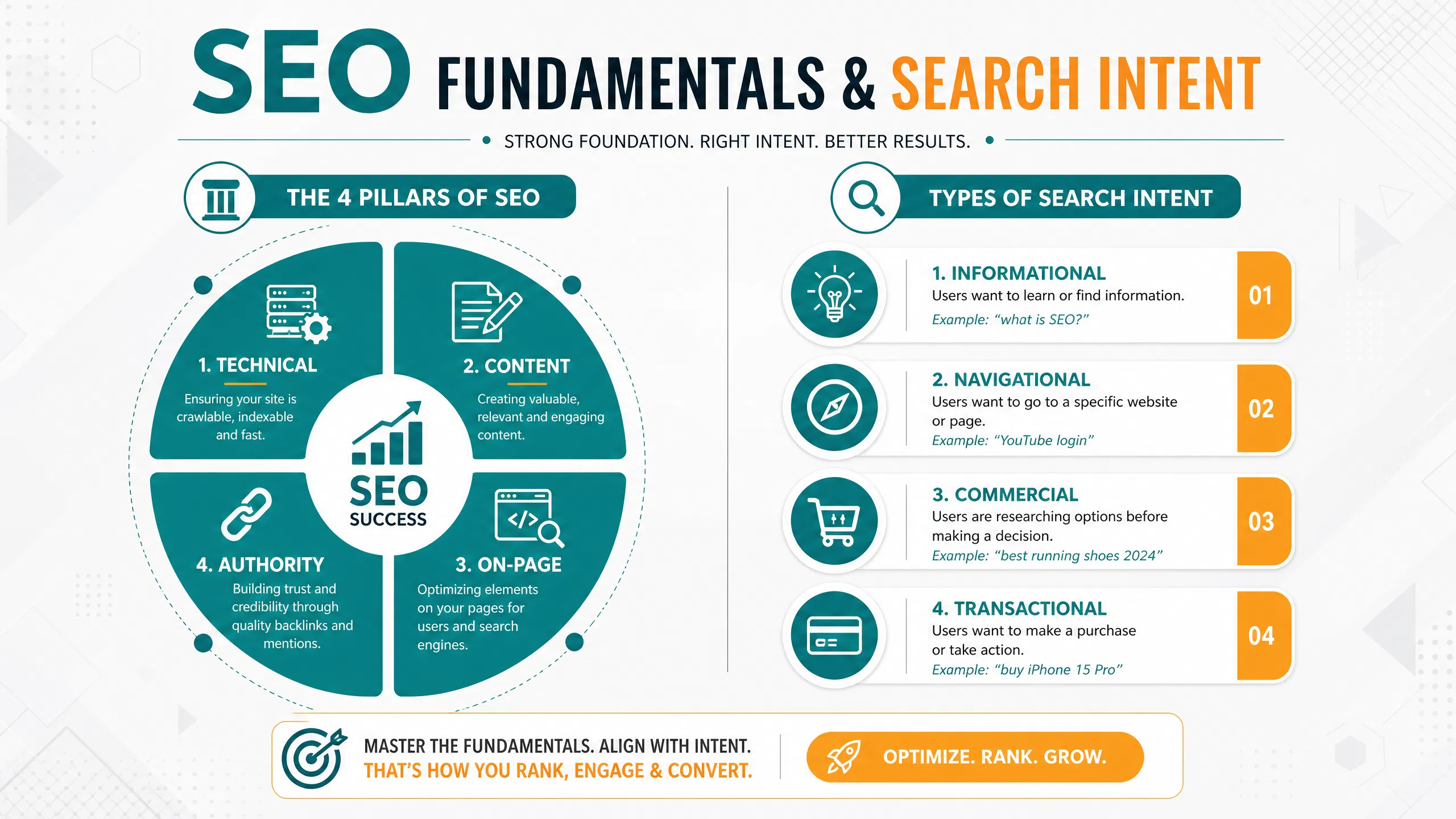
Search intent refers to the reason behind a user’s search query. Google prioritizes content that best matches the user’s intent.
There are four main types of search intent:
| Search Intent | Example |
|---|---|
| Informational | “What is SEO?” |
| Navigational | “Facebook login” |
| Commercial | “Best SEO tools” |
| Transactional | “Buy SEO software” |
Understanding intent helps create content that satisfies users and ranks higher.
Keyword Research Fundamentals
Finding High-Value Keywords
Keyword research is the foundation of SEO. Without proper keywords, even great content may fail to rank.
Useful keyword research tools include:
- Google Keyword Planner
- Ahrefs
- SEMrush
- Ubersuggest
- Google Search Console
Focus on keywords with:
- High relevance
- Strong search intent
- Moderate competition
- Consistent search volume
Businesses seeking advanced SEO support often learn practical keyword strategies through digital marketing training providers like Forelite Training.
Long-Tail Keywords and User Intent
Long-tail keywords are longer and more specific phrases. They often have lower competition and higher conversion rates.
Examples:
- “best SEO strategy for small businesses”
- “how to rank higher organically”
- “local SEO services in Nairobi”
Long-tail keywords help attract highly targeted traffic and improve conversion potential.
On-Page SEO Optimization
Optimizing Titles and Meta Descriptions
Title tags and meta descriptions influence click-through rates significantly.
Best Practices for Title Tags
- Include the target keyword
- Keep under 60 characters
- Add emotional or power words
- Make titles compelling
Meta Description Tips
- Use clear language
- Include the keyword naturally
- Stay under 160 characters
- Encourage clicks
Example:
SEO Strategy: 15 Proven Ways to Boost Organic Rankings Fast
Header Tags and Content Structure
Proper heading structure improves readability and SEO.
Use:
- H1 for the main title
- H2 for major sections
- H3-H6 for supporting details
Well-structured content helps search engines understand page hierarchy.
Internal Linking Best Practices
Internal links connect pages within your website. They help:
- Improve navigation
- Pass authority
- Increase user engagement
- Help search engines discover content
For example, businesses exploring SEO services can also learn about branding and digital growth strategies from Nexera Digital Solutions Services.
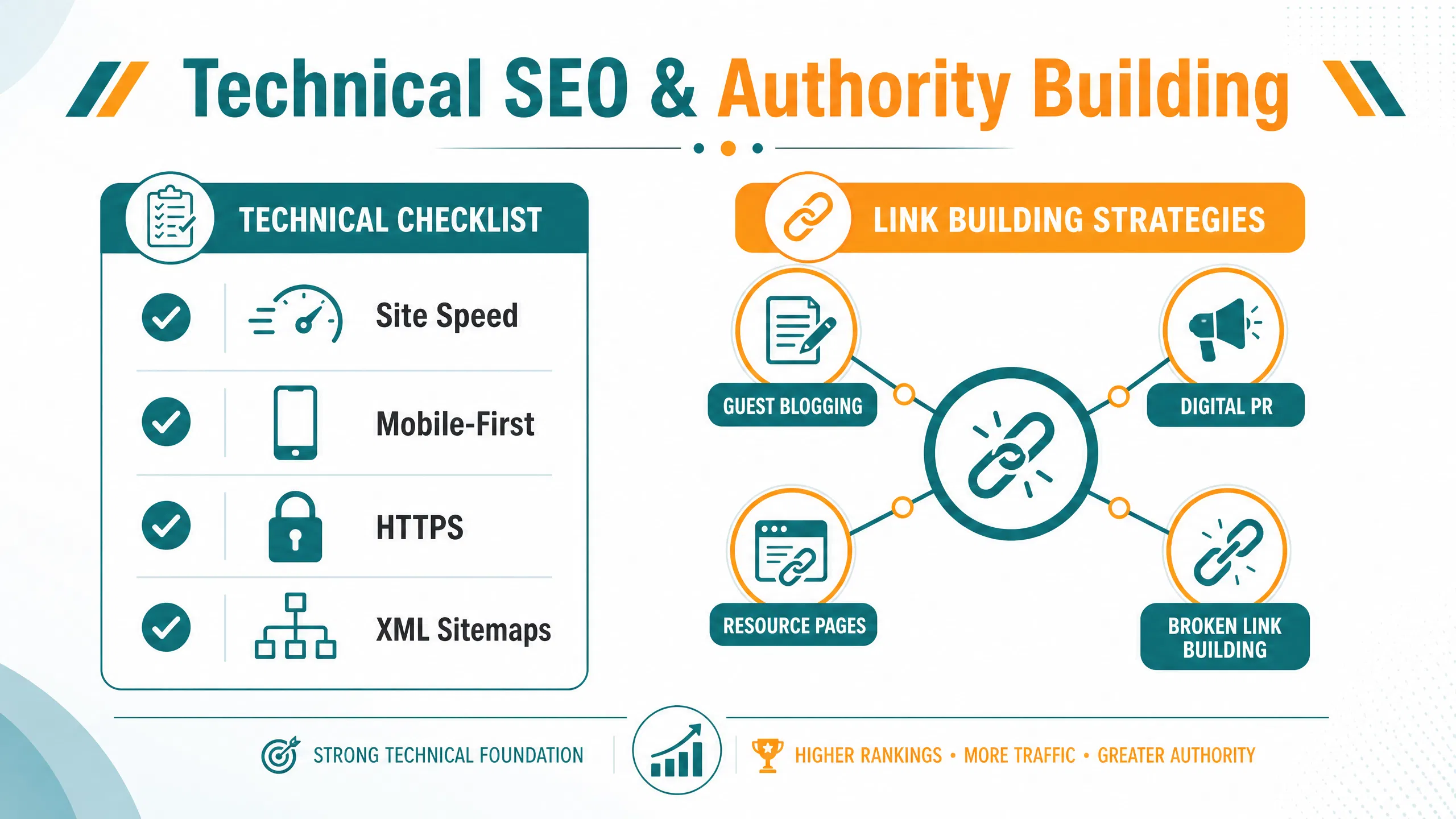
Technical SEO Essentials
Website Speed Optimization
Website speed directly impacts rankings and user experience.
Ways to improve speed:
- Compress images
- Use caching
- Minimize JavaScript
- Choose fast hosting
- Use a CDN
Fast-loading websites reduce bounce rates and improve engagement.
Mobile-Friendly Website Design
Google uses mobile-first indexing, meaning mobile performance is essential.
A mobile-friendly site should:
- Load quickly
- Have responsive design
- Use readable fonts
- Feature easy navigation
More than half of all web traffic now comes from mobile devices.
Secure HTTPS and Site Architecture
HTTPS improves security and trustworthiness.
A strong site structure should include:
- Logical navigation
- Clean URLs
- Proper categories
- Breadcrumbs
Technical SEO ensures your site remains accessible and easy to crawl.
Content Marketing and SEO
Creating Helpful and Original Content
High-quality content remains one of Google’s top ranking factors.
Great content should:
- Solve problems
- Answer user questions
- Be easy to read
- Include visuals
- Offer actionable advice
Avoid thin or duplicate content because it weakens rankings.
E-E-A-T and Content Authority
Google values:
- Experience
- Expertise
- Authoritativeness
- Trustworthiness
To improve E-E-A-T:
- Cite reliable sources
- Publish accurate information
- Showcase expertise
- Build a professional website
Businesses can strengthen authority through professional web development and branding support from Nexera Digital Solutions Web Design.
Link Building Strategies
Earning High-Quality Backlinks
Backlinks remain one of the strongest ranking signals.
Effective backlink methods:
- Guest blogging
- Digital PR
- Resource pages
- Broken link building
- Shareable content creation
Quality matters more than quantity.
Guest Posting and Outreach
Guest posting allows you to:
- Reach new audiences
- Build authority
- Earn backlinks
- Increase brand visibility
Outreach campaigns should focus on relevant and trustworthy websites.
Local SEO Optimization
Google Business Profile Optimization
Local SEO helps businesses appear in location-based searches.
Important optimization steps:
- Complete your profile
- Add accurate business information
- Upload photos
- Encourage reviews
Local Citations and Reviews
Consistent citations across directories improve local rankings.
Customer reviews also influence trust and click-through rates.
Measuring SEO Success
Essential SEO Metrics
Track these metrics regularly:
| Metric | Importance |
|---|---|
| Organic Traffic | Measures visibility |
| Bounce Rate | Tracks engagement |
| Keyword Rankings | Shows SEO performance |
| Conversion Rate | Measures profitability |
| Backlinks | Indicates authority |
Best SEO Tools for Tracking Performance
Popular SEO tools include:
- Google Analytics
- Google Search Console
- Ahrefs
- SEMrush
- Moz
These tools help identify growth opportunities and technical issues.
Common SEO Mistakes to Avoid
Keyword Stuffing
Overusing keywords creates poor user experiences and can trigger penalties.
Always write naturally for humans first.
Duplicate Content
Duplicate pages confuse search engines and reduce ranking potential.
Use canonical tags when necessary.
Ignoring Technical Issues
Technical errors such as broken links, crawl issues, and slow loading speeds can hurt rankings significantly.
Regular audits are essential.
Future Trends in SEO
AI and Search Optimization
Artificial intelligence is reshaping search.
Modern SEO strategies must adapt to:
- AI-generated search summaries
- Natural language processing
- User behavior analysis
Content should remain people-focused and genuinely useful.
Voice Search and Visual Search
Voice searches are growing rapidly.
Optimize for conversational phrases like:
- “What is the best SEO strategy?”
- “How can I improve organic rankings?”
Visual search optimization also continues to grow through image SEO and structured data.
Frequently Asked Questions
What is an SEO strategy?
An SEO strategy is a structured plan designed to improve a website’s visibility in search engine results pages organically.
How long does SEO take to work?
SEO usually takes between 3 to 6 months before significant improvements appear, depending on competition and website quality.
Why is keyword research important?
Keyword research helps identify what users search for so businesses can create relevant content that attracts targeted traffic.
What are backlinks in SEO?
Backlinks are links from other websites pointing to your site. They help improve authority and rankings.
Does mobile optimization affect SEO?
Yes. Google prioritizes mobile-friendly websites through mobile-first indexing.
Can small businesses benefit from SEO?
Absolutely. SEO helps small businesses compete online by increasing visibility and attracting local customers.
Conclusion
Building a successful SEO Strategy requires consistency, patience, and a focus on users. SEO is no longer about shortcuts or tricks. Instead, it involves creating high-quality content, improving technical performance, earning authority, and understanding user intent.
Businesses that invest in long-term SEO gain stronger visibility, better trust, and sustainable growth. By implementing the strategies covered in this guide, websites can improve rankings, attract targeted traffic, and achieve lasting online success.
SEO continues to evolve, but one principle remains constant: websites that provide genuine value to users will always perform better in search results.
Leave a Reply